 Our Story
About Us
From a small kitchen in Hilo to a beloved Big Island institution — rooted in tradition, made with aloha.
Our Story
From a small kitchen in Hilo to a beloved Big Island institution — rooted in tradition, made with aloha.

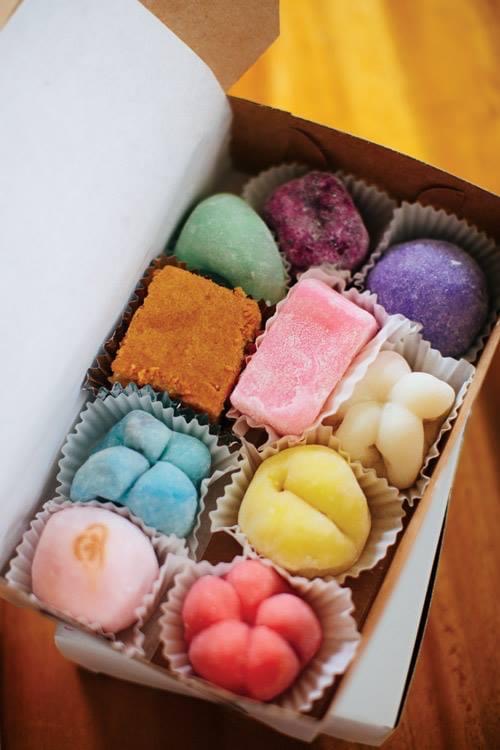
Two Ladies Kitchen was founded in 1996 by Aunty Nora Uchida and her aunt Tomi Tokeshi in downtown Hilo on Hawaiʻi's Big Island. What began as a labor of love in a small commercial kitchen quickly became a Hilo institution, built on a deep respect for traditional Japanese confectionery and a commitment to handcrafting every piece fresh, every single day.
The shop launched with seven mochi flavors and three manju varieties. Within a year, growing demand prompted a move to its current location on Kīlauea Avenue — doubling kitchen space and bringing the shop to street-front visibility in the heart of Hilo.
In 2019, Aunty Nora retired — and made a decision that spoke volumes about her character. She offered the business not to the highest bidder, but to her two most trusted longtime employees: Emerald Tuares and Clyde Ebanez.
Under Aunty Nora, the standard was uncompromising. During training, anything that fell short of perfect earned a quiet head shake — "No, not acceptable." Emerald and Clyde absorbed that ethos completely, and carry it into every single piece they make today.
"She offered it to us because she trusted us. She trusted that we would keep it the same."— Emerald Tuares, Co-owner
"Make mochi with love... anything that you make, make it with love — cause it's gonna taste so much more amazing."— Emerald Tuares, Co-owner
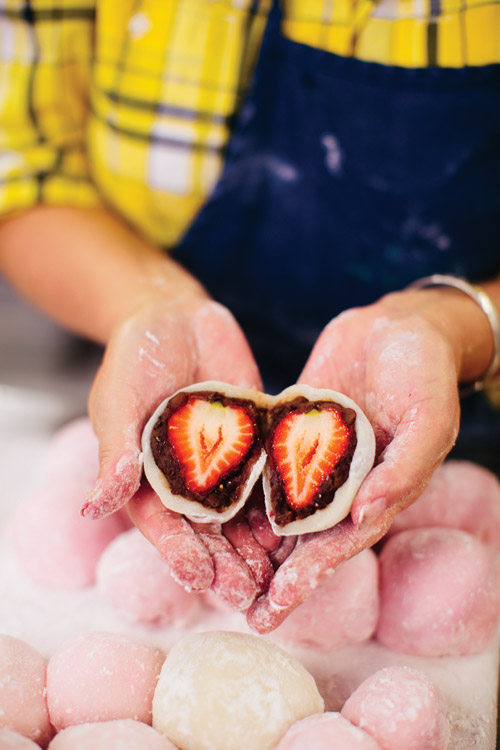
Author Kristen Morita visited Two Ladies Kitchen for her upcoming cookbook, Mochitsuki (forthcoming). Here's what she found.
On Kīlauea Avenue in Hilo, Hawaiʻi, there's a single-story building with weathered wood paneling and a perennial line out the door. The sign on the awning says "TWO LADIES KITCHEN" in all caps. Inside, there is one small counter with just enough space for a cash register and a few rows of mochi packaged in plastic containers. Back in the kitchen, workers dutifully wrap freshly steamed and kneaded mochi dough around chunks of bean paste to form perfect daifuku.
Emerald Tuares, one of the current owners along with Clyde Ebanez, told me: "We go through about two hundred pounds of mochiko per day and regularly make a thousand mochis per day. When we're really busy, the amount of mochi we sell is way past that."
Two Ladies Kitchen started with a simple idea and grew into something far beyond what its founders imagined. Nora Uchida, one of the founders, described it as "very humble beginnings and very hard work."
"Two Ladies has a Japanese background, but because we're in Hawaiʻi, and we're a diverse state, we incorporate everybody's likes," Emerald said. Nora put it simply: "When you make things a little bit more contemporary, it'll reach all kinds of people." Now, just like the islands of Hawaiʻi, Two Ladies' mochi attracts visitors from all over the world.
Some of our fillings are listed in Japanese — here's what each one means.